Showing posts with label library programming. Show all posts

What is Project LIT All About? Two Secondary Librarians Share their Experiences

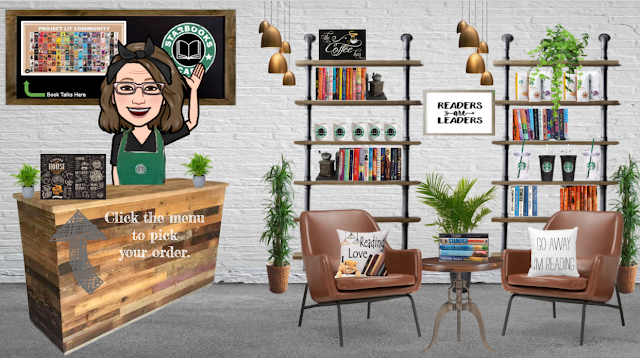
Project Lit Cafe Bitmoji Classroom

By Kara Johnson, Librarian at Hendrickson High School, and Kimberly LaMarre, librarian at Park Crest Middle School, both in Pflugerville

project lit booksnap
Project Lit Digital Incentive Wheel
Project Lit Booksnap


First of all, what is Project LIT? 

Kara: Project LIT began in 2016 when English teacher Jared Amato from Nashville, Tennessee, recognized that something had to be done about book deserts. He organized a huge book drive to distribute books to readers of all ages. He quickly realized though that the books needed to be high quality, relevant, and culturally sustaining. That is how Project LIT evolved into what it is today: a large network of Project LIT chapter leaders who commit to work together to empower readers, promote reading, and celebrate books. Each year Project LIT releases its list of book titles one by one through their social media accounts. There is a YA list and a middle grade list. One thing I learned is that you don’t have to be reading from the current year’s list. This is very helpful in implementing the program because there are dozens of titles from which to choose! And you can wait until books come out in paperback to help save money. 

How did you hear about Project LIT?
Kimberly: I’m at a middle school and I heard that the cool high school librarians were offering Project LIT...I wanted in for my students, too.
Kara: I first heard about Project LIT from Twitter. I started following their account and liked the titles on the lists. 

What made you decide to join Project LIT?
Kimberly: I’ve been booktalking our state reading list for years but when I saw the titles on the Project LIT list I was impressed that it was curated by students and reflective of today’s issues.  I wanted the conversation around books to be ignited--not just read and move on.
Kara: I decided to join Project LIT because the titles on the list are high interest, relevant, and inclusive. At the high school level it is hard to get students to want to read. I thought the PL books would help solve this problem. 


How are the books chosen?

Kimberly: Jared Amato’s students helped create the first list. Today, members of the Project LIT network from all over can submit nominations -- students, teachers, librarians etc. A giant list is compiled,narrowed down and sent back to the Project LIT chapters. They then submit their ballots on the books they are most excited about. Finally, the Project LIT educators meet to review votes and finalize the lists. Currently, my campus is reading the nominated lists and discussing.  We have not taken it to the level of finding a great title and sending in a nomination.
How does Project LIT benefit students and teachers?

Kimberly: Anytime you can get students to read, it’s a win.  If you can get them to discuss the books with others, then the learning is deeper and changes can be seen.
Kara: Agreed - It is hard to get high school students to like reading. If we can get the students to find at least one book that speaks to them we can possibly make a difference. The program also involves hosting events. I have shared live and taped interviews with PL authors with my ELA teachers. When the kids can actually hear from the authors, it helps them become more interested and connect in a deeper way to the books. 
Project Lit Novels for ELA

How have you implemented Project LIT during this strange and virtual year?
Kimberly: We launched Project LIT this school year, so providing the books for my in-person students and my virtual students was important. Diverse reading is my goal initiative this year. I had the financial support of my administrators as well, so we were able to purchase the titles in print and digital. We also added MP3 players of audiobooks and the digital audio as well. Many avenues to get these great titles read. Our campus uses Canvas, so I added Project LIT to our programs area. Students can link to book talks on the titles and then participate in silent discussions as they finish a title. Since we aren’t meeting in person, it was great to use the online platform to discuss. It also allowed my students to finish the titles at their own pace and add to the conversation when they were ready. I do have a special display for Project LIT titles right now but I also will keep the titles shelved in the regular fiction genres. To kick off the program we had gift cards from local places donated and when students participate in a silent discussion for a title, their name goes in a drawing for the gift card. It’s been fun to make the videos and spin the wheel of prizes.
Kara: HHS is implementing PL in the ELA classrooms. I received a $5000 grant at the end of last year to purchase ebook copies of the PL titles since we knew this year was going to be a challenge with print books. I originally was going to run virtual PL book clubs with our reading class, which is a class for struggling readers. The program quickly evolved though when our ELA teachers were able to acquire new novels for their classrooms through a textbook adoption. 9th, 10th, and 12th all chose titles that were on PL lists. I knew then that I would be helping them implement the PL within their ELA program. I switched my focus from small reading groups to purchasing large numbers of titles that the teachers were reading in their classrooms so that the virtual learners had digital access to the books as well. The ELA department purchased the print copies from their budget. It has been a partnership with the English teachers from the beginning of the year. I have shared resources with them for the titles they are reading and have shared interviews and poetry readings from the authors as well. I hope the program expands more next year to 11th grade. Since I was awarded a grant, I did a pre PL survey and will do a post PL survey about whether or not the students like to read and what their favorite book was that they read in English class. I have a feeling a lot of the PL titles will be the favorite of this year. Stay tuned….

How could it be implemented in a typical year?

Kimberly: I would continue what we have set up even if we were all in person.  The online format allows my students to read the words and thoughts of other students to help them select their next book.  It allows them to read at their own pace and not keep on a schedule with a group.  And it also allows my younger and older students to discuss all together instead of divided out by their grade level.  Since I don’t see my students in large classes I am doing most of the book talking through Google slide decks.  Each title has its own cover pic and then includes links to book talks by me, YouTube book trailers, author interviews and other fun media I can find.
Kara: Since we have used the program in the ELA classroom, I see it continuing for many years. My hope is that when we can gather again, we can hold in person meetings or events related to the books each grade level is reading. Maybe we could even get one of the authors to visit our school--fingers crossed! Virtual visits have not panned out this year but it is not due to a lack of trying.

How can librarians be a part of Project LIT?

Kimberly: Follow Project LIT on Instagram ( @projectlitcomm ) and Twitter ( @ProjectLITComm ) first; watch the posts and you’ll get how they disperse information.  You then can apply to lead a chapter at your school.  It’s all about reading and getting conversations started.
Kara: I second what Kimberly said!


Visiting with Authors, Virtually

By Susan VanDeWater, Librarian, Wieland Elementary, Pflugerville ISD

This school year has been full of new experiences, and buzzwords like "unprecedented” and “pivot.” Buzzwords I’m happy to never hear again. But it’s a year that has pushed me out of my comfort zone.

Hosting an author visit in a normal year can be daunting. But in a year full of restrictions and new rules? Yikes. Technology fails frighten me, and the thought of Zoom not working in the middle of a school-wide event makes my stomach turn.

But my desire to bring something fun and engaging to my students outweighed my fear. My principal often tells me that things don’t have to be perfect. Everything is a learning experience, including Zoom fails!

A local, independent book store, BookPeople, works with area schools to organize dynamic author visits. I was able to take part in two this year--one pre-recorded and one live. They were amazing. And easy!

First up was Kwame Mbalia, author of the recently-announced 2021-22 Bluebonnet, Tristan Strong Punches a Hole in the Sky. I hosted a live visit with him via Zoom Webinar. (I was able to use the District’s Zoom Webinar account. Check with your district to see if that’s an option.) I hadn’t run a webinar before so I recruited a few of my fellow librarians to help me test it out. My campus IT Support guru joined in and we worked through various scenarios--promoting people to co-hosts or panelists, sharing my screen, spotlighting speakers. It helped me get a feel for the application and gave me greater confidence.

On campus students joined as a group from their classrooms; virtual students used the same link as classrooms to join from home. I chose the Webinar option because it allowed greater control of the crowd. No one was on camera unless I promoted them to panelist.

Students listened to Kwame and then had an opportunity to submit questions through the Q&A. I monitored the questions and fed them to Kwame. My principal and our library coordinator helped me monitor questions, too. That was helpful since it meant I could listen to Kwame while the kids continued to submit questions.

At the end of the visit, I promoted everyone to panelist and invited them to turn on their video. This gave students a chance to wave to Kwame and allowed him to see everyone at once. The students and teachers loved it!

Kwame Mbalia Virtual Visit

The second visit I hosted was pre-recorded. There was definitely less stress associated with that event, but of course it wasn’t as interactive. This time I was able to bring Mac Barnett to campus. This was a dream come true for me. My students fell in love with him after I introduced them to Triangle.

His timeline for a live visit didn’t work with our schedule, so a pre-recorded visit was the best option. Students submitted questions, which I sent to Mac (via BookPeople). A month later, we received two videos -- a generic video where Mac discussed his newest book, talked about the writing process, and showed us his original Gameboy. The second video was Mac reading and answering our questions.

I showed the video in two groups. All of the questions came from students in 2nd-5th, so I set up a regular zoom meeting with those grades. We watched both videos together.

Kindergarten and 1st grade watched only the generic video, which was still fun and engaging, and perfect for their attention spans.

Mac Barnett Virtual Author Visit

Both author visits were free through BookPeople; I merely had to sell a certain number of books. I’m at a Title 1 school, so I didn’t meet the sales minimum either time. I ended up buying several copies and donating them to classroom libraries. It was less expensive than bringing any author to visit, though.

The feedback I received from students and teachers was so positive. The kids were especially pumped about the live visit but also loved Mac’s hilarious videos.

Hosting a virtual visit was so much easier than I thought it would be. I just needed a little push and some support. I really can’t wait to do it again!

Kwame Mbalia


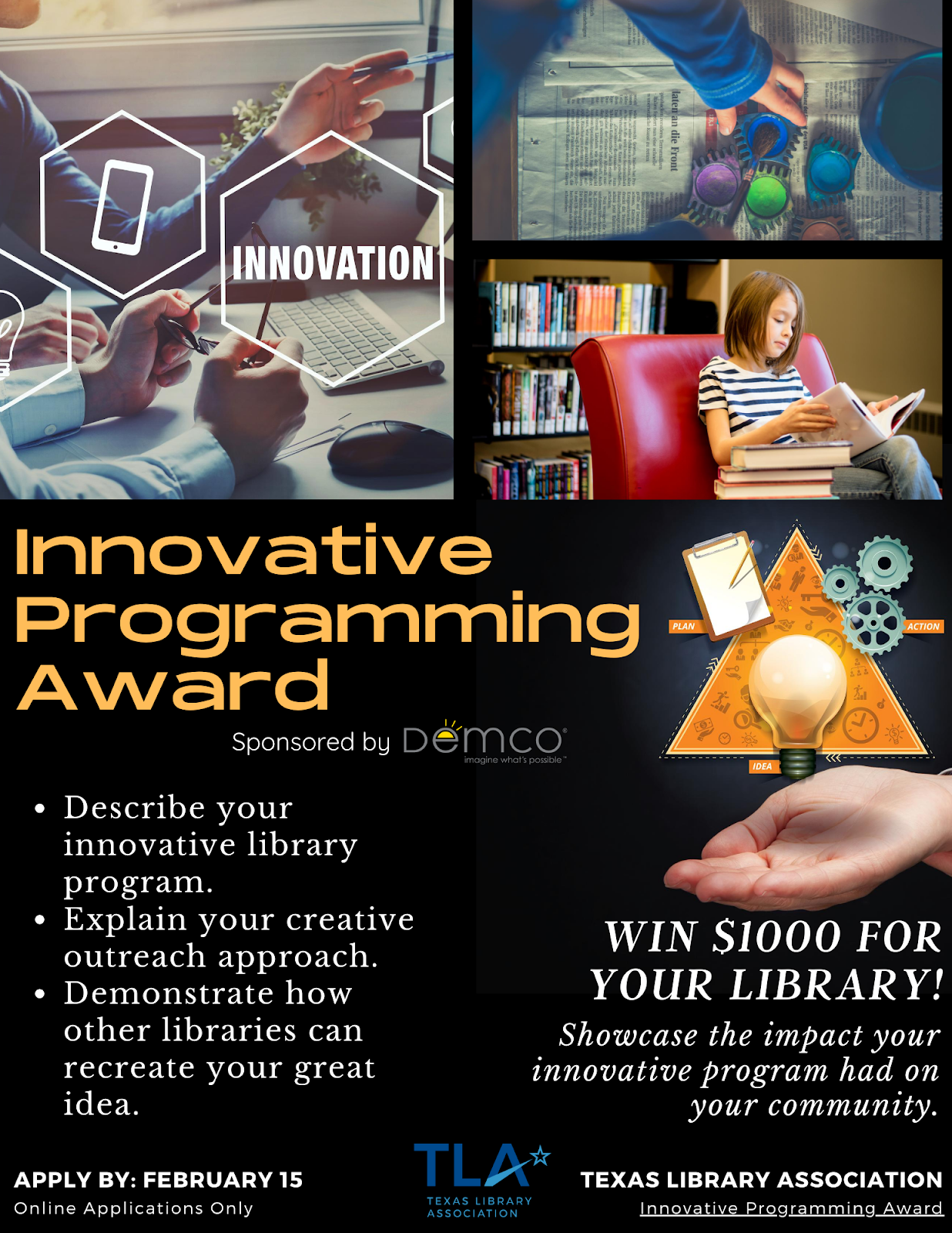
Innovative Programming Award - Sponsored by Demco

 By Wenndy Pray, MLS - Innovative Programming Award Committee Member

    Librarians are among the most creative, innovative educators. And as such, they have thought-out, engineered, and orchestrated innovative programming for the communities they serve. To honor their efforts, the Innovative Programming Award was born. The Innovative Programming Award (sponsored by Demco) recognizes two libraries--one school, and one for all other library types (i.e., public, academic, special)-- that have implemented creative marketing projects and/or promotions to enhance their visibility within their service community.

    Perhaps your library has implemented a new website, created new community engagement programs, devised a creative way to showcase genre promotion and topic awareness, or you've created innovative projects to inspire reading and life-long learning. Now is a great time to take the library program you've implemented in recent years and showcase its success. In order to see the implemented program's full potential in action, programming would need to be in effect for at least three years before applying.

    Applications opened September 1, 2020, and must be submitted by February 15, 2021. All applications must be submitted using the Innovative Programming Award Google Form. Access the promotional PDF by clicking here. Visit the Innovative Programming Award TLA website for additional details.

    The Texas Library Association Innovative Programming Award committee knows there are amazing programs and even more amazing librarians behind them. Winners will receive $1,000 for their libraries. The committee encourages all eligible prospects to apply. Best of luck to all!

The Power of Community

by Shirley Robinson, TLA Executive Director


The days leading up to March 11 were some of the most stress-filled I’ve ever experienced professionally in my 25-year nonprofit and association management career. Our incredible TLA staff were in full-on two weeks out from conference hustle-mode. Concerns over the threat of COVID-19 and what its impact could be to our conference were looming with dozens of calls and emails a day from members, exhibitors, and suppliers. When we ultimately made the decision with our Executive Board to cancel the conference that morning of the 11th, it was a relief that we had made the very painful but correct decision to protect the health and safety of our members and their communities. Ultimately, that same day the City of Houston banned all large events and the rest of the State and nation were all facing similar decisions. It was a time of uncertainty and shared commiseration of loss and mourning as we began the journey of the unknown.
Today, just a little more than four weeks later, the TLA Executive Board, membership, and staff are excited to be launching our first ever Virtual Conference. We’ll have more than 40 hours of pre-recorded content, live sessions and chat rooms for members to interact on April 21- 22, with even more fun surprises to come throughout the summer with an expanded learning series! A good quarter of the programs are targeted to our school library community with many more that may pique an interest you didn’t know you had. We’re thrilled that many registered attendees have chosen to convert their conference registration over to the Virtual meeting where they’ll receive many more hours of CE than they could have in a face-to-face conference. We’re also excited to see many members registering from far reaches of the state (and even some out of state) that haven’t previously been able to make the trip for time or budgetary reasons. If you know a school librarian who hasn’t attended TLA before please encourage them to register at https://txla.org/annual-conference/attend/schedule/.

Since joining TLA in early January I’ve already come to know and love the resiliency and spirit of collaboration of our library members. Even in my interview process I could see that the level of engagement and support of the association comes from an incredibly passionate and active base of members. This is a unique attribute that you don’t always find in associations, and it was exciting to see and has been even more exciting to experience. As we all navigate through the next few months, this resiliency will be a hallmark that not only helps the association to survive but we will thrive and grow through these lessons of innovation and creativity.


I can’t wait to meet more members from our school library community in the coming months. As a Mom, I thank you for the tremendous work you’re doing to support our educators and students, and as TLA’s Executive Director, I thank you for all you do to enrich this association. I am here for you – just a phone call or email away.

Shirley

Shirley Robinson, CAE
Executive Director
Texas Library Association

Tejas Star Reading List: Shining a Light on Spanish and Bilingual Books

by Priscilla Delgado, PhD student at St. John’s University, Tejas Star Reading List Committee Chair

Reading in two languages is twice the fun! With Spanish being the second-most spoken language in Texas, plus the rise of dual-language programs across the state that provide instruction to native Spanish speakers and native English speakers in both languages, Spanish and bilingual books are needed now more than ever.

The Tejas Star Reading List (TSRL) is an annual recommended reading list of Spanish and bilingual children’s books sponsored by the Texas Library Association. The purpose of the list is to encourage children ages 5-12 to explore multicultural books and to discover the cognitive and economic benefits of bilingualism and multilingualism.

The 2020-21 Tejas Star Reading List was recently released, featuring 24 exemplary Spanish and bilingual titles that include fiction and non-fiction picture books, chapter books, and graphic novels with themes of activism, environment, and identity, as well as stories of famous and important historical figures.
Several picture books on this year’s list are Spanish translations of bestselling English titles, including Chancho el campeón (Pig the Winner) by Aaron Blabey, El coleccionista de palabras (The Word Collector) by Peter H. Reynolds, Lola quiere un gato (Lola Gets a Cat) by Anna McQuinn, ¡Hola, Cangrejito! (Hello, Crabby!), and Señorita Mariposa by Ben Gundersheimer.

A variety of titles focus on our planet and outer space. Luciana: Misión submarina (Luciana: Braving the Deep) by Erin Teagan follows Luciana, the 2018 American Girl of the Year who aspires to be the first astronaut on Mars. Fuego, fueguito / Fire, Little Fire, a poetry book by Jorge Tetl Argueta, describes--in Spanish, English, and Nahuatl--the characteristics of fire from the perspective of one little spark. If you’ve ever wanted to learn more about the Titanosaur - the biggest, heaviest creature to walk on this planet, you’ll need to read Titanosaurio: El descubrimiento del dinosaurio más grande del mundo (Titanosaur: Discovering the World's Largest Dinosaur) by Dr. José Luis Carballido and Dr. Diego Pol. Mario y el agujero en el cielo: Cómo un químico salvó nuestro planeta (Mario and the Hole in the Sky: How a Chemist Saved Our Planet) by Elizabeth Rusch is a biography of Mexican-American scientist Mario Molina, who helped solve the ozone crisis of the 1980s.

The list features two additional biographies. Papa Francisco: Creador de puentes (Pope Francis: Builder of Bridges) by Emma Otheguy shares what life was like for Jorge Bergoglio as a boy growing up in Argentina before becoming Pope. Sembrando historias: Pura Belpré: bibliotecaria y narradora de cuentos (Planting Stories: The Life of Librarian and Storyteller Pura Belpré) by Anika Aldamuy Denise is a beautifully written book about the first Latina librarian employed at the New York Public Library and the namesake of the Pura Belpré Award that recognizes authors and illustrators whose works best portray the Latino cultural experience.

An innovative 5-book set, A lomo de cuento (A Storybook Ride) by Sergio Andricaín and Antonio Orlando Rodríguez, provides insight to numerous Latin-American countries and islands, including Argentina, Cuba, Mexico, Peru, and Puerto Rico. Each book explores the geography and culture as well as oral tradition and storytelling.

Two notable titles describe being uprooted from home, with two different plots but similar themes of hope. In Un nuevo hogar (A New Home) by Tania de Regil, a boy moving from New York City to Mexico City and a girl moving from Mexico City to New York City express their fears about leaving home to live in a new and unfamiliar place. Luca’s Bridge / El puente de Luca by Mariana Llanos is the emotional story of a boy coming to terms with his family's deportation from the United States to Mexico.

A few books encourage activism - speaking up and getting involved. Peter H. Reynold’s ¡Di algo! (Say Something!) explores the many ways that a single voice can make a difference. No dejes que desaparezcan (Don’t Let Them Disappear) by Chelsea Clinton profiles twelve endangered species around the world and describes why it is important to save each animal from extinction.

Graphic novels featured on this year’s list include Hombre Perro: El Señor de las Pulgas (Dog Man: Lord of the Fleas) by Dav Pilkey and Pangato: Soy yo. (Catwad: It’s Me.) by Jim Benton, two hilarious adventures. 

The themes of identity and family are evident in some of the books on this year’s list. Mi papi tiene una moto (My Papi Has a Motorcycle) by Isabel Quintero is a touching story of a father and daughter with special memories of home. In ¿De dónde eres? (Where Are You From?) by Yamile Saied Méndez, after a young girl is asked where she's from--where she's really from--she turns to her grandfather for some help.

The Tejas Star Reading List committee will be presenting activities and resources to use with this year’s titles at the Texas Library Association conference on Wednesday, March 25, 2020, at 10:00 am. Make plans to attend to learn more about the reading list and to explore the TSRL activity guide with ready-to-use resources. The activity guide, as well as downloadable bookmarks and posters, will be available on our website: txla.org/tejas-star.

Multicultural Children's Book Day

by Michelle Cooper, Digital Learning Specialist, Region 7 ESC


Multicultural Children's Book Day (MCBD) was established in 2012 to celebrate diversity in children’s books. Co-founders, Valarie Budayr and Mia Wenjen, share a mission to not only raise awareness for children’s books that celebrate diversity but to get more of these books into classrooms and libraries. The celebration this year will be held on January 31st, and the MCBD is providing a wealth of FREE resources for educators, parents, and librarians. All the resources can be accessed on the MCBD website.

Classroom Physical and Developmental Challenges Kit:
  • book recommendations that will help Readers Understand Physical and Developmental Challenges for ages 4 -12.
  • Classroom or Home Activities
  • “Physical and Developmental Challenges” Classroom Poster thanks to the talents of award-winning illustrator, SKlakina
  • HelpfulPhysical and Developmental Challenge Talking Points for Teachers
  • Links, resources and services that are available to families facing the challenges of coping with Physical and Developmental Challenges in the U.S.A.


Check out the highly talented list of children’s book advocates, writers, and bloggers who were chosen to serve as co-hosts and global co-hosts for this event because of their dedication to supporting diversity in children’s literature. These CoHosts and Global CoHost’s sites will also host the wildly-popular book review/blog post-link-up that occurs during the last week in January.


It’s a Twitter party, and you are invited! Join in the fun Friday, January 31st by using the hashtag #ReadYourWorld. MCBD will have tons of multicultural children’s books and swag to give away.

Maya Angelou once shared, “It is time for parents to teach young people early on that in diversity there is beauty and there is strength.”  Take some time on January 31st to #ReadYourWorld!

Texas Library Association's 2020 Reading Lists

by Kristi Starr, librarian at Coronado High School in Lubbock ISD, TxASL Chair-Elect


With new calendar years come new book lists. Though the announcement of many national awards is a couple of weeks away at ALA Midwinter, you can find many of the likely honorees on the reading lists developed by Texas librarians. Let’s take a brief look at the Texas Library Association 2020 reading lists, all available on the TxLA website.

The Little Maverick Graphic Novel Reading List is a recommended reading list designed for children in grades K-5. The purpose of the list is to encourage students to explore a variety of current graphic novels. The list is subdivided with titles appropriate for students in grades K-2, 3-5, and K-5.

Next comes the Texas Bluebonnet Award master list. These 20 titles are suitable for students in grades 3-6. Students vote for their favorite title. The author of the book receiving the most votes is presented the Texas Bluebonnet Award during the annual Texas Bluebonnet Award Luncheon at the TxLA Annual Conference. Programming resources are available for the 2018-2019 list and pending for 2019-2020.

The Lone Star reading list is developed to encourage students in grades 6, 7, or 8 to explore a variety of books. This year’s list is composed of 20 titles.

The Maverick Graphic Novel Reading List is selected for students in grades 6-12. The list contains titles for students in grades 6-8, 6-12, 9-12, and Adult for YA.

Spirit of Texas books represent “literary works of and about Texas and Texans.” Whether set in Texas or the author has Texas ties, these books do Texas proud. The list contains titles for both middle and high school students and includes programming for the selected books and authors.

Tayshas Reading List titles include nonfiction and fiction from a variety of genres and formats. These books are selected with students from grades 9-12 in mind.

Books on the Texas Topaz reading list are all nonfiction but may include picture books, novels in verse, and graphic novels. The Topaz list is comprised of an adult sublist and a sublist for students in grades K-12.

For Spanish speakers, the Tejas Star list is comprised of books which “encourage children ages 5-12 to explore multicultural books and to discover the cognitive and economic benefits of bilingualism and multilingualism.”

Lariat Reading List books target adult fiction. 25 titles are selected simply as “a pleasure to read.”

The 2x2 reading list has not been updated to reflect the 2020 selections, but these books are selected for children ages 2 - 2nd grade.

All lists are intended for recreational reading, not to support specific curriculum. Each list is created by a committee of Texas librarians with a knowledge of and passion for reading books that fit the prescribed age range, format, or genre.

These lists also promote reading broadly. Books on the Topaz list, for instance, include picture books, graphic novels, narrative nonfiction, memoirs, and more. Graphic novel lists contain fiction and nonfiction, as does the Texas Bluebonnet list. Lone Star and Tayshas lists are comprised of a variety of genres and formats, both fiction and nonfiction. You can even find pairings like Mindy McGinnis’s Heroine and Dreamland: The True Tale of America's Opiate Epidemic, by Sam Quinones and adapted for young adults. Or Hephaistos: God of Fire, George O’Connor’s graphic novel on the Maverick list, could complement Julie Berry’s Lovely War from the Tayshas list.

There’s something for everyone in the TLA reading lists. And if you aren’t sure where to start, maybe a reading challenge is just your style. Check out this master list of reading challenges for 2020.

What are you waiting for?

Because We All Have Something To Share

By Wenndy Pray, Librarian, B. L. Gray Jr. High School, Sharyland ISD

I’ve just started in my library. I haven’t even done anything yet. I’m in my “beg, steal, & borrow” phase. What could I possibly contribute? And other similar thoughts occupied my mind when I thought of making an impact in my librarian community. What advice would a brand new librarian have to give?

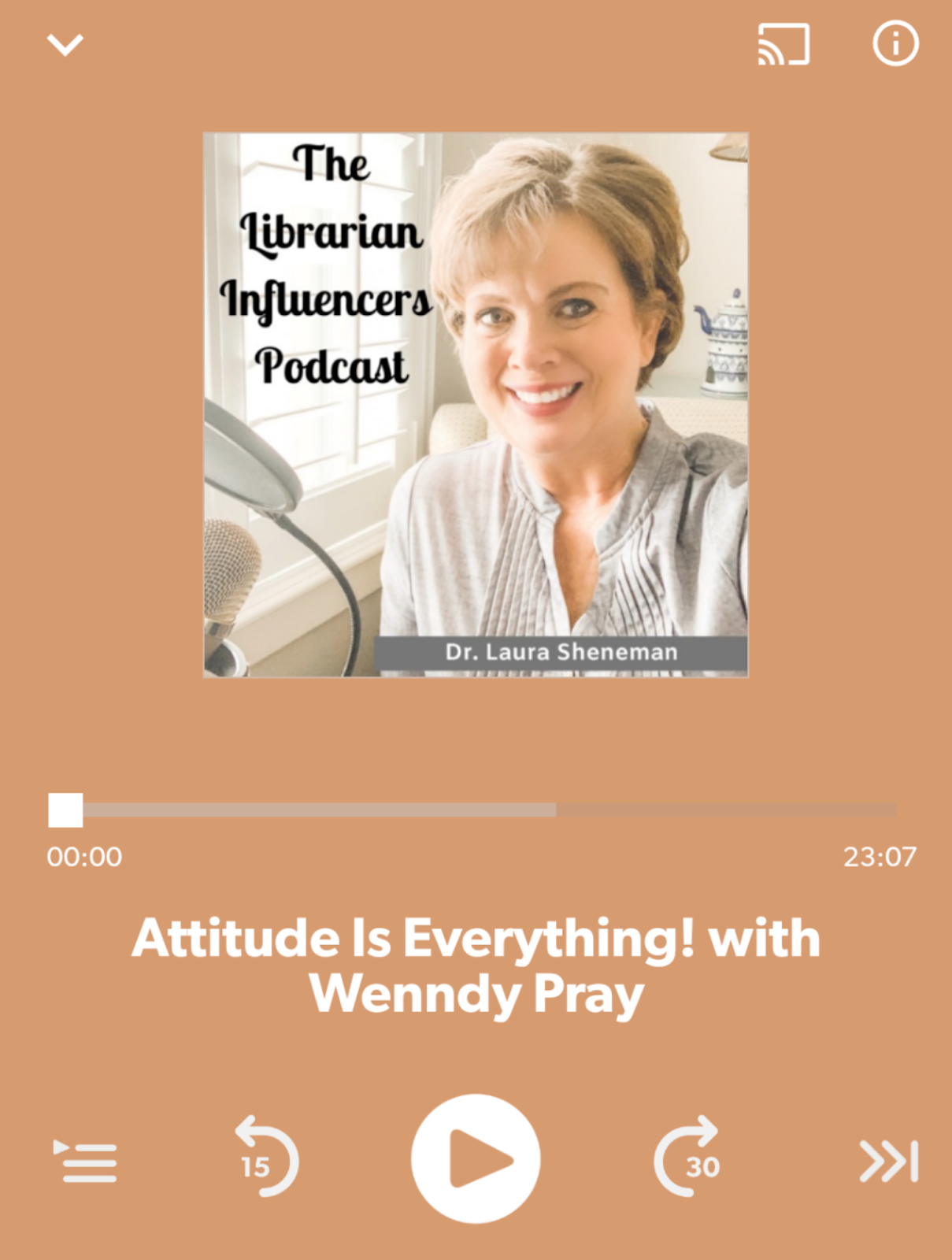
Lucky for me, our district librarian has always been very helpful in providing opportunities to expand our horizons, and after writing "Reflections of a First-Year Librarian" for the Texas Library Journal, I realized that I could contribute my experiences to my community and help my fellow librarians establish a strong start in their career. Shortly after I wrote this article, I read Brave Before Perfect: A New Approach for Future Ready Librarians by Traci Chun. That, along with further encouragement from my peers, provided the impulse I needed to answer an invitation that Dr. Laura Sheneman, Coordinator of Library Services and Information Resources for Region One Education Service Center, had extended to experts in the field. It was an invitation to propose topics for her new Librarian Influencers podcast. So I was brave.

Filling out the proposal was a piece of cake. I’ve always inspired my students to write about what they know, so I would do just that. I wanted to share about my successful start in the library. I was to begin my fourth year and was confident that I could share my experiences and advice over a new platform: podcasts. Frankly, it was exciting. Whether I’d be approved or not, just filling out the proposal and stepping out of my comfort zone made me happy. 

The turnaround was quick. Dr. Sheneman sent an approved message with detailed instructions on how to arrange what we would discuss. This made me feel confident and secure. I need structure, so preparing notes before our recording helped me keep my discussion and answers on topic. When I get excited about something, I tend to talk about other related topics, so this was incredibly helpful. She presented it in a form of a Google Slide. I selected a quote that summarized my vision and thoughts about librarianship and provided a picture for the podcast promo.


And now for the play-by-play. I introduced myself, shared about my school and student body, talked about the wonderful faculty on my campus, and expanded on the relationship I have with my school’s administration. I shared on my professional learning network (PLN), important books that keep me grounded and focused, and about how attitude is everything. I even expanded on what I would tell myself at the start of my career. (Wouldn’t we all just love a time machine?) It was a wonderful experience to share and enrich my librarian community. And although I had prepared some notes to help me answer the questions, I felt relaxed with the organic experience. And the best part is that I was chosen to be the inaugural speaker to kick off the podcast! Being the first guest speaker was indeed a special treat. (Thank you, Dr. Sheneman!)

I know I have peers whose minds are riddled with the same thoughts of not knowing what to contribute - especially those of us who have fewer than five years in the field. But you do. We do! We all have something we can share to grow, broaden our perspective, provide encouragement, or just confirm the path we’ve taken. We all do great things and can be called experts in something we do well for our students and library program. I encourage my fellow librarians to reach out. 

You can tune in to The Librarian Influencers podcast on iTunes, Stitcher, Google Play, and Spotify. I am one of many librarians who have provided their insight on various issues in librarianship. “It’s a time to share your professional voice. It’s a time to offer other librarians a chance to build their PLN. Especially for those who are alone in their district or area. It’s a time to connect and be empowered,” shares Dr. Sheneman.


I felt just that. Was it perfect? Not by any means. But being brave enough to step out into uncharted territory has sent ripples of support into my librarian community. This experience has also given me the confidence to share through the TASL Lunch & Learn platform with short webinars. Imagine what we could all do for our fellow librarians. I encourage you to step out, search within you, your style, activities, ideas, outreach - let’s be brave for each other. Because we all have something to share.


Enter the Letters About Literature Competition

by guest blogger Rebekah Manley, Coordinator at Texas Center for the Book 

A graphic with the text Letters About Literature. Read. Be Inspired. Write Back. A Library of Congress National Reading-Writing Promotion Program.

Has a book made you laugh, brought you to tears, or changed your life? Write a letter to the author and enter the Letters About Literature Competition.

All 4th-12th grade students are invited to participate! Winners receive $100 and travel assistance to the Texas Library Association Annual Conference for a special awards ceremony.

You may read winning entries on the Letters About Literature Texas website.

There are three categories for contestants:  
Level 1 - Grades 4-6   
Level 2 - Grades 7-8
Level 3 - Grades 9-12

Follow these steps:

READ  Select a fiction or nonfiction book, a poem, or a play you have read that you feel strongly about. (Sorry, no song lyrics!) It might be a book that helped you through a difficult time, or it
might be a book that simply touched your heart or inspired you.

REFLECT  Think before you write. How did this author’s work change you or your view of the world? How and why are you different now than you were before you read this work?

PERSUADE  Write a personal letter to the author stating how reading his or her work changed you. Be personal and persuasive! Support your ideas with specific details, including details from the work itself. This is not a fan letter, but rather a reflection on how an author’s work influenced you.

WRITE  Type your entry in letter format. All submitted letters must be typed and between 400 and 800 words.

SUBMIT  Upload your letter to the new online submission platform (opening November 4, 2019). A permission form is required for all student participants who will be younger than 13 years of age on November 4, 2019. Make sure entries are submitted by December 17, 2019.

Teachers: Please encourage your students to enter. The website has a dedicated educator resource page. Many instructors tack this program onto an already planned curriculum, like memoir, letter, and essay writing.

How are the letters judged? The letters go through four rounds of judging. Judges ask: Is the letter written to the author and does it provide reflective details to support how the author’s work changed the reader’s view of the world or self? They also rate the content, expression, structure, and grammar of the letter.

Tips: Have someone proofread your letter. Make sure you read your letter out loud to someone and have them read it back to you. This way, you will hear how your letter sounds and catch any typos.

Important: Be sure to visit the Letters About Literature page* for the submission steps, permission form and official rules set by the Texas Center for the Book at the Texas State Library and Archives Commission. This year’s contest runs from November 4, 2019, to December 17, 2019.

All contest information is available at *www.tsl.texas.gov/lettersaboutliterature

Teacher Day @ TLA - Teachers + Librarians = Dynamic Duos!

By Jennifer Eckert, Library Specialist in Northside ISD, San Antonio


Collaboration with teachers is a large part of any school librarian’s job. We are always looking for ways to inspire and encourage collaboration in order to meet all our students’ needs. Let that inspiration come from facilitating an experience at the Texas Library Association's 2020 Annual Conference!

The TLA Annual Conference – made up of books, authors, technology integration, makerspaces, curriculum connections, and supportive librarians – is the stuff of teachers’ dreams. Connect with your teachers, encourage their innovation, inspire them to greater collaboration, and impact their instruction by inviting your teachers to join you at this year’s Teacher Day @ TLA!

Teacher Day @ TLA, which will take place on Thursday, March 26, 2020, provides classroom teachers with the opportunity to experience a special one-day event during the TLA conference comprised of speakers, activities, and pricing designed just for them.

This is your chance to inspire your teachers and form a dynamic duo! You, as a sponsoring school librarian, will play a crucial role by identifying interested teachers, helping them secure permission and funding for their attendance, guiding them through the registration process, and ensuring our guest teachers have a positive experience.

The planning has begun for a fun, interactive day for the teachers who attend, as well as the librarians who sponsor them. Participants are welcome to stay for the full conference. Now is the time for interested librarians to:

a) identify motivated classroom teachers and

b) start to lay the groundwork for conference attendance and travel funding.

The focus of this program is for classroom teachers who experience a TLA conference to return to their districts as library advocates and collaborators - or perhaps become librarians themselves. Details and application information about Teacher Day @ TLA, an event that has become an annual highlight, can be found at http://www.txla.org/teacher-day. You can also follow us on social media for updates using the hashtag #TDTLA. Don’t miss this opportunity to increase collaboration on your campus!

Getting Creative: Collaborating With Your Fine Arts Department

by Nicole Cruz, Lead Librarian, Sharyland ISD

TCA Touring Artists pictured: Outspoken Bean-Slam Poet, Donna Ingham-Storyteller, and Ruby Nelda Perez-Actress. 
Sharyland High School Theatre Director Christopher Fernandez is pictured with the students in the bottom left corner.


On Thursday, September 5th, a joyous squeal was heard at the Penny Payte McLeaish LRC. A very happy librarian had just opened her email and read the following message: Congratulations! Your Arts Respond Performance Support application was reviewed by our board today and approved to receive this amount - $1,350. Grant number 85748 was funded. 

The mission of the Texas Commission on the Arts (TCA) is to advance our state economically and culturally by investing in a creative Texas. TCA supports a diverse and innovative arts community in Texas, throughout the nation and internationally by providing resources to enhance economic development, arts education, cultural tourism and artist sustainability initiatives. Even though this is not my first TCA Arts Respond Performance Support Grant, every time I read those words - grant funded, it is always a euphoric feeling. It means quality performers will be entertaining, informing, and connecting with the students and staff of the campuses that I serve. It means that successful teacher and librarian collaboration has been achieved. It means that the arts are alive and well at the school that I serve. Students will cultivate an appreciation of the arts when they are exposed to quality dancers, illustrators, musicians, storytellers, authors, and actors. The arts encourage creativity, innovation, and self-confidence—essential skills for a 21st century workforce. The Texas Commission on the Arts Touring Roster is comprised of talented and professional performers. 

The news was received in September, but the initial collaboration and planning was done in July to meet the August 1 deadline. This application was a collaborative effort between teacher and librarian. The Sharyland High School theatre director Christopher Fernandez and I have built a professional collaborative relationship over the course of four years. I credit Mr. Fernandez's successful theatre program as being the partner for the matching portion of each grant. In order to apply, applicants must commit to funding half or a little more than half of the total cost for performance fees, per diem, travel, and hotel expenses. School librarians can find partners through parent organizations like PTA or PTO; booster clubs, art department funds, principal accounts, or community organizations. I’m also grateful to have a supportive campus principal. Lori Ann Garza has provided the necessary approval and assistance with logistics, scheduling, and audience recruitment.

The fall round of grants were awarded to 111 sites across the state. Non-profit sites include community theatre programs, museums, symphonies, fine arts councils, public libraries, development boards, and schools. The total funded is just under 9 million. The TCA staff are supportive and helpful when it comes to questions during the application process, after receiving the award, and follow-up on necessary documentation at the close of the program. Anina Moore, Director of Communications for TCA, is a constant source of wisdom and support. 

How can you apply for a TCA Arts Respond Performance Support Grant? I want to encourage librarians to collaborate with art teachers, music or band directors, theatre directors, or dance instructors to bring quality performances to their campuses. The applications and attachments are due November 1, 2019. The application is straightforward and easy to complete online. Applications are for performances and activities by artists from the Texas Touring Roster occurring December 15, 2019 - March 14, 2020. Go to the TCA website to learn more or email Anina Moore at anina@arts.state.tx.us 


Lunch & Learn Webinars

by Brandi Rosales-Dawson, Library Systems Administrator in Richardson ISD, and Stacy Cameron, Coordinator of Library Services in Frisco ISD


The Texas Association of School Librarians (TASL) Lunch & Learn webinars are back for another year with timely topics including scheduling, collaboration, communication, programming, and more. The webinars began last year after the TASL executive board saw a need for additional professional learning specifically for Texas school librarians, since not all school librarians are able to attend the annual TxLA conference. Through the support of former TLA Executive Director Dana Braccia, TASL Lunch & Learn webinars were created in a weekend and launched in December of 2018. 

We knew we wanted the series designed around Texas educators presenting the content for several reasons. First, we have amazing school librarians across this state doing great things on their campus, and we want to highlight and lift up their hard work so others can learn and implement those ideas. Second, presenters need to be accessible to those attending or watching the recording. While there is value in seeing national speakers present, we want an attendee to feel they could contact a presenter for additional tips and tricks as they move through their own implementation. Lastly, as we know school librarianship can make us feel like islands, and this is one way to help school librarians connect with each other across the state. 

During the initial year, presenters were selected by word of mouth and their online reputation for innovative implementations on their campus. The Lunch & Learn webinars were such a hit last year with the average registration for each webinar being about 80 and live attendees around 25. This year we opened it up to any Texas librarian/educator who wants to share library programming implementations or instructional practices they are doing on their campus and/or with their community. At this time we are still looking for presenters to fill weekly webinar offerings through the end of the year. If you have a great programming or lesson you would like to present, please fill out the following form so we can get you on the schedule. 

Webinars are free to all TASL members, but registration is required. Each webinar lasts only 30 minutes, but if you’re unable to attend live, you can access the recording once it has concluded. 

To register for a September webinar, click here

September 4 - Flexible Scheduling in the Elementary Library
September 11 - Library Ambassador Customer Service Program
September 18 - Upgrade Your Secondary School Library
September 25 - Level Up Your Staff Newsletter

For future webinars, keep an eye on your inbox for emails from TASL or you can find registration links on the Texas Library Association website! 

AASL National Conference Session Voting!

by Nancy Jo Lambert, TASL Chair


Are you thinking about attending the AASL national conference in Louisville, KY, November 14-16, 2019? Want to have a say in what sessions will be offered? Now is your chance! Crowdsourcing is now open for concurrent sessions for the AASL National Conference!

What does that mean? School library practitioners, that’s you TASL School Librarians, may select up to 10 program descriptions for each of the programming strands – Inquire, Include, Collaborate, Curate, Explore, and Engage.

The window is now open for voting through April 5, 2019 for concurrent session proposals for all 6 Strands:

According to AASL, the goals of crowdsourcing are to:

Help the national conference committee program co-chairs make final decisions on programming during the AASL National Conference

Encourage participation in and boost excitement for the upcoming AASL National Conference.

AASL encourages all school library practitioners to participate in this new opportunity, however, please do not ask for friends or family members that are not school library practitioners to participate.