Showing posts with label librarian. Show all posts

Podcasting in the Library and Amplifying Student Voice

By Alexandra Cornejo

Alexandra Cornejo is a high school librarian in Harlingen, TX. She is a member of the Texas Maverick Reading List Committee and hosts a booktalk podcast Allie the Librarian Booktalks. She is an enthusiast of comics and graphic novels and can often be found reading them late into the night with her booklight. Twitter @allie_cornejo


iPod + Broadcast =Podcast, this was the concept that was born in 2004 to offer the world radio on demand. Podcasts are usually audio only and meant for entertainment or news, but have since evolved to provide content on a multitude of subjects. There are actually about 750,000 podcasts or 30 million episodes available today!  It's not surprising that educators have found their niche within the podcast sphere and some of my absolute favorite podcasts are Cult of Pedagogy, Overthrowing Education and Educhange. However, my love of podcasts doesn’t stem from listening to them or even hosting my own. I really knew I loved podcasts when I realized they were an essential tool for providing students choice in the classroom or library. 

I've been listening to podcasts for years and I've always preferred them over YouTube or even music on the radio. Being an auditory learner, listening to thoughtful conversation has always aided in my comprehension of information. This served as an inspiration to bring this way of learning into the library; an innovative way for students to demonstrate evidence of learning or using it as a method of internalizing information. Choice boards have become popular and education technology is now essential to a quality education, so my hunt for a user-friendly way of recording a podcast was urgent. I needed an app that wouldn’t be hard for students to grasp and made the product easily shareable. Synth was an app I found on library Twitter that offered everything I needed to carry out podcasting for the classroom. Synth, at the time, allowed 4 ½ minutes to record and students could respond to their classmate’s podcast through voice comments. I immediately brought it into my library and had students begin creating their own podcasts by summarizing informational texts and having their classmates, or audience, respond with thoughtful commentary. Podcast projects grew to include reflections for expository writing, book reviews, interviews and eventually, even my Tech Team had a weekly podcast they were publishing. Podcast presentations became a fixture on my student choice boards and after I conducted podcast PD with my teachers, this presentation method was a common tool in my teachers’ digital toolbox. 

The benefits I’ve seen from podcasting with students have been numerous, indeed. Podcasts are immersive, which appeals to our sociologically trained ear that is inclined to listen to a story from start to finish, which also diminishes opportunity for distraction. Students develop valuable skills in articulating their thoughts effectively with the limited time they are allowed. Also, my students are their own harshest critics, so when they listen to themselves, they notice every “Um”, “Well”, and “Like” and quickly make the necessary adjustments. One of my favorite benefits, though, has to do with Emergent Bilinguals and the fact that they’re using their listening, speaking, reading and writing skills required for language proficiency when a podcast project requires script writing, voice recording and audience participation. And while Synth is still my preferred way of producing podcasts in the library, the trend has grown and increased in availability on a number of platforms, including Flipgrid, Garageband and Anchor. 

It’s a joy to witness my students become expert storytellers and savvy debaters, and I have, especially, enjoyed being able to effectively communicate with parents and teachers through an audio newsletter podcast I embed on my website. Podcasting has become such a passion of mine that I created my own podcast, Allie the Librarian Booktalks, which is available where you listen to your favorite podcasts. Conveniently, recording a podcast is fairly easy to carry out using a variety of devices. Chromebooks, laptops, iPads and smartphones are all great choices for recording. Earbuds with mic capabilities eliminate a lot of noise pollution which increases sound quality but are not necessary. 

I do hope you’ll give this a try in your library, as many of our students tend to be anxious creating a video response in class. Let podcasts serve as a way of easing a student out of their comfort zone to create something just as effective and entertaining. This is a trend that will not be going away anytime soon and I’m positive that it has found a permanent spot on our choice boards to amplify student voice.


Looking Ahead: Words from Texas Association of School Librarians Chair 2021-22

by Jill Bellomy, TASL Chair 2021-22, Librarian, Highland Park Middle School Library and Lead Librarian, Highland Park ISD

TASL

We did it! We made it to the summer after one incredibly trying school year. Last August, did you wonder how we would make it through the first semester yet alone the year? I certainly did. Yet here we are! Throughout the months, we were challenged and stretched. We learned and grew. We creatively met the needs of our students and staff in brand new ways. We served as technology troubleshooters daily. We helped teachers discover different ways to engage students in person and online. We ran our homes while also focusing on the needs of our schools. We kept kids reading and learning. We have so much to be proud of, school librarians!

That said, our experiences looked very different from school to school. Many of us could perform the essential functions of a circulating library, but not much else. Some operated full curbside service to get books to large numbers of remote learners. Others could not even circulate materials as administrators called us to serve other duties. Some welcomed students back into their spaces, and others were never able to do so. Most felt they existed in survival mode, facing challenge after challenge and just trying to get to the finish line.

Whatever your situation, TASL recognizes that you endured a year like no other. We want to support you as you look ahead. We hope to help all our members take the necessary steps toward running engaging library programs that are again the hub of the school. To move from surviving to thriving!

TASL will continue to strive toward our mission of promoting library services and librarianship in Texas school libraries. We will pursue that in many ways that include connection, advocacy, and professional development. These are more important now than ever!

CONNECTION.

We encourage you to reconnect with colleagues in your area and across the state to form and grow your PLNs.

  • Thank you to the many members who volunteered for TASL Committees!
    You will form new connections and will help us do the vital work of the division. If you missed the chance to volunteer this time, watch for another opportunity to assist in the spring.
  • To stay up on the latest, be sure to follow @TxASL on Twitter (if you aren’t already.) Heather Hornor and our exceptional Social Media Team
    keep us in the know, and the TASL members are constantly posting innovative ideas. So follow for inspiration and new connections!
  • Watch for an exciting new online community coming soon to TLA. This community will replace the listservs and will allow members to engage in more dynamic, meaningful conversation. Some TLA members are beta testing the platform this week, and it looks very promising.

ADVOCACY. 


TASL continually promotes librarians as valued teachers and leaders on our campuses, advocates for strong school libraries at the state level, and fosters advocacy skills in our membership.

  • You will find advocacy resources curated for you on the TASL website. Bookmark these to help you stay proactive in your efforts!

  • Brooke King and the TASL Legislative and Advocacy Committee do an excellent job of providing additional resources throughout the year. For example, last year’s School Library Bingo was fun and effective.

  • One meaningful way we advocate each year is by presenting and exhibiting at the PTA Launch Annual Conference. This year’s conference is July 30 - August 1 at The Gaylord Texan, Grapevine. Watch for a chance to sign up to work a shift (or two!) at the TASL booth. Serving at this conference is a great way to champion school libraries and to sharpen your advocacy skills!


PROFESSIONAL DEVELOPMENT. 


We provide professional learning at conference and throughout the year to help our members grow in the many roles we play in our schools.
  • We are already hard at work planning for TLA Annual Conference 2022! This year’s theme is perfect: Recover. Rebalance. Reconnect. Start making plans to attend April 25-28 in Fort Worth in person, if you can!
  • Thank you to all who submitted proposals.  There are many innovative submissions!  We will be in touch as we evaluate the submissions and select the best learning opportunities for our members. 
  • Watch for more learning offerings from Lakeisha Branch and the TASL Membership Committee in the months to come.

Echoing the sentiments of our TLA President Dan Burgard, it is now time to take a much-needed breath. You deserve some self-care after serving so many for so long. Rest, recharge and reflect over the upcoming weeks. If you think of ways TASL can help you or have ideas to strengthen our division, please share at https://bit.ly/TASLfeedback or reach out to me at jillbellomy at gmail dot com.


This year, we rose to the challenge before us, gathered strength and knowledge from each other, and persevered. Now, we can take the lessons learned and move forward stronger than ever. With smoother waters and sunnier skies ahead, the future is bright, school librarians!


What is Project LIT All About? Two Secondary Librarians Share their Experiences

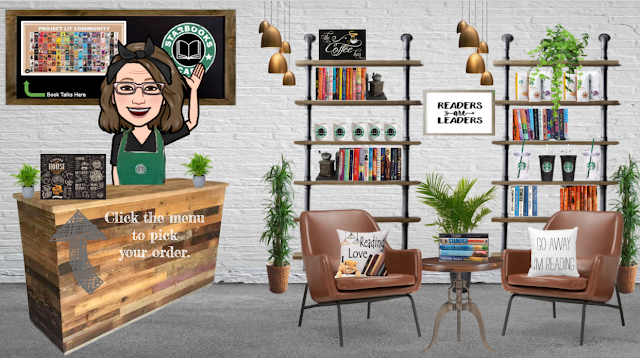
Project Lit Cafe Bitmoji Classroom

By Kara Johnson, Librarian at Hendrickson High School, and Kimberly LaMarre, librarian at Park Crest Middle School, both in Pflugerville

project lit booksnap
Project Lit Digital Incentive Wheel
Project Lit Booksnap


First of all, what is Project LIT? 

Kara: Project LIT began in 2016 when English teacher Jared Amato from Nashville, Tennessee, recognized that something had to be done about book deserts. He organized a huge book drive to distribute books to readers of all ages. He quickly realized though that the books needed to be high quality, relevant, and culturally sustaining. That is how Project LIT evolved into what it is today: a large network of Project LIT chapter leaders who commit to work together to empower readers, promote reading, and celebrate books. Each year Project LIT releases its list of book titles one by one through their social media accounts. There is a YA list and a middle grade list. One thing I learned is that you don’t have to be reading from the current year’s list. This is very helpful in implementing the program because there are dozens of titles from which to choose! And you can wait until books come out in paperback to help save money. 

How did you hear about Project LIT?
Kimberly: I’m at a middle school and I heard that the cool high school librarians were offering Project LIT...I wanted in for my students, too.
Kara: I first heard about Project LIT from Twitter. I started following their account and liked the titles on the lists. 

What made you decide to join Project LIT?
Kimberly: I’ve been booktalking our state reading list for years but when I saw the titles on the Project LIT list I was impressed that it was curated by students and reflective of today’s issues.  I wanted the conversation around books to be ignited--not just read and move on.
Kara: I decided to join Project LIT because the titles on the list are high interest, relevant, and inclusive. At the high school level it is hard to get students to want to read. I thought the PL books would help solve this problem. 


How are the books chosen?

Kimberly: Jared Amato’s students helped create the first list. Today, members of the Project LIT network from all over can submit nominations -- students, teachers, librarians etc. A giant list is compiled,narrowed down and sent back to the Project LIT chapters. They then submit their ballots on the books they are most excited about. Finally, the Project LIT educators meet to review votes and finalize the lists. Currently, my campus is reading the nominated lists and discussing.  We have not taken it to the level of finding a great title and sending in a nomination.
How does Project LIT benefit students and teachers?

Kimberly: Anytime you can get students to read, it’s a win.  If you can get them to discuss the books with others, then the learning is deeper and changes can be seen.
Kara: Agreed - It is hard to get high school students to like reading. If we can get the students to find at least one book that speaks to them we can possibly make a difference. The program also involves hosting events. I have shared live and taped interviews with PL authors with my ELA teachers. When the kids can actually hear from the authors, it helps them become more interested and connect in a deeper way to the books. 
Project Lit Novels for ELA

How have you implemented Project LIT during this strange and virtual year?
Kimberly: We launched Project LIT this school year, so providing the books for my in-person students and my virtual students was important. Diverse reading is my goal initiative this year. I had the financial support of my administrators as well, so we were able to purchase the titles in print and digital. We also added MP3 players of audiobooks and the digital audio as well. Many avenues to get these great titles read. Our campus uses Canvas, so I added Project LIT to our programs area. Students can link to book talks on the titles and then participate in silent discussions as they finish a title. Since we aren’t meeting in person, it was great to use the online platform to discuss. It also allowed my students to finish the titles at their own pace and add to the conversation when they were ready. I do have a special display for Project LIT titles right now but I also will keep the titles shelved in the regular fiction genres. To kick off the program we had gift cards from local places donated and when students participate in a silent discussion for a title, their name goes in a drawing for the gift card. It’s been fun to make the videos and spin the wheel of prizes.
Kara: HHS is implementing PL in the ELA classrooms. I received a $5000 grant at the end of last year to purchase ebook copies of the PL titles since we knew this year was going to be a challenge with print books. I originally was going to run virtual PL book clubs with our reading class, which is a class for struggling readers. The program quickly evolved though when our ELA teachers were able to acquire new novels for their classrooms through a textbook adoption. 9th, 10th, and 12th all chose titles that were on PL lists. I knew then that I would be helping them implement the PL within their ELA program. I switched my focus from small reading groups to purchasing large numbers of titles that the teachers were reading in their classrooms so that the virtual learners had digital access to the books as well. The ELA department purchased the print copies from their budget. It has been a partnership with the English teachers from the beginning of the year. I have shared resources with them for the titles they are reading and have shared interviews and poetry readings from the authors as well. I hope the program expands more next year to 11th grade. Since I was awarded a grant, I did a pre PL survey and will do a post PL survey about whether or not the students like to read and what their favorite book was that they read in English class. I have a feeling a lot of the PL titles will be the favorite of this year. Stay tuned….

How could it be implemented in a typical year?

Kimberly: I would continue what we have set up even if we were all in person.  The online format allows my students to read the words and thoughts of other students to help them select their next book.  It allows them to read at their own pace and not keep on a schedule with a group.  And it also allows my younger and older students to discuss all together instead of divided out by their grade level.  Since I don’t see my students in large classes I am doing most of the book talking through Google slide decks.  Each title has its own cover pic and then includes links to book talks by me, YouTube book trailers, author interviews and other fun media I can find.
Kara: Since we have used the program in the ELA classroom, I see it continuing for many years. My hope is that when we can gather again, we can hold in person meetings or events related to the books each grade level is reading. Maybe we could even get one of the authors to visit our school--fingers crossed! Virtual visits have not panned out this year but it is not due to a lack of trying.

How can librarians be a part of Project LIT?

Kimberly: Follow Project LIT on Instagram ( @projectlitcomm ) and Twitter ( @ProjectLITComm ) first; watch the posts and you’ll get how they disperse information.  You then can apply to lead a chapter at your school.  It’s all about reading and getting conversations started.
Kara: I second what Kimberly said!


Suggestions for ISTE Certified Educator Success


In December 2019, I began the process of earning educator certification from International Society for Technology in Education (ISTE).  I was looking for a way to improve my technology skills to enhance my classes. I pinpointed ISTE professional development and applied for a grant. I was excited when I went to the Texas Computer Education Association (TCEA) headquarters for the two-day face to face training. I took the class with a variety of educators from all over the state of Texas. Then there were participants from Puerto Rico too. The interesting part of the training is that it is not just for classroom teachers. There were administrators, higher education instructors, technology teachers, and district personnel in the group.

The two-day training is not the only certification requirement. The training prepares educators for an interactive online class consisting of modules, materials, and assignments for each ISSTE Educator standard. A roadmap, a standard pamphlet, templates, and a handbook are provided. These materials prepare participants for the course and the documentation needed for certification. If participants work through the course and promptly complete assignments, they can get feedback on their work. Ultimately, some of these materials can become part of the portfolio.

After the online class is finished, candidates move to the next stage. This stage is the portfolio creation step. Although I thought I had researched the process, I underestimated the commitment that I would need to make progress. When I took the face-to-face training, I was confident that I would have more artifacts done by the end of the online class. I was not close to being done.

Therefore, I recommend that candidates take the time extension if they need it. Initially, I did not want to take an extension. The extension felt like a badge of shame. But I had an important deadline to meet. Candidates should not feel ashamed if they need the extension. I was not judged.  In fact, early on in the process, participants receive messages telling them how to apply for the extension.  I tried to avoid needing to extend, but in the end, I took it, and it relieved some of the pressure.

With this said, here are some tips for completing the portfolio. My first tip is to make friends with the people in your cohort. Exchange contact information during the two-day class. Then classmates can check each other’s work.

Next, use research skills to find tips from other people that have finished the certification process. Candidates can search for materials that have been submitted by previous ISTE certified educators. They often detail their experiences on blogs.  I was inspired by the blogs that I read. But, be careful. The requirements have changed, and documents are configured differently now.

Another tip is to think about some of the materials that already exist that can be adapted. Candidates may need to teach a lesson again and change it to incorporate the standards. Reenvision what has been done through a reflective scope to finish quicker.

After the training portion of the process, it is easy for one to believe that they know how to create each standard example. When the portfolio submission site is accessible, candidates will see examples of submissions for each standard. The models are based on the subject taught and the position of the candidate. It is best to review the examples so that one can conceptualize how to create artifacts.

Candidates need plenty of feedback. There will be meetings to enable interaction with other participants and ISTE facilitators. During the meetings, participants can share an artifact and ask a specific question about it. Also, sessions will cover each standard. In conjunction with posting portfolio samples to the discussion board, these meetings can be beneficial for receiving feedback.

Review the examples in the ISTE site early because they can be quite detailed. It took me a considerable amount of time to plan activities for each standard. Then the portfolio requires participants to put the examples in a format that is easy for the reviewers to read. There must be a short narrative based on the standards’ content to explain how materials fit the criteria. I also had to edit several videos or identify specific time frames in the videos to make my examples concise for reviewers.  

At the end of the process, participants will need to summarize what they have learned in a written narrative or a video. I found it easier to create the video. I recommend reviewing the summary requirements in advance and taking notes during the portfolio development.

In all, I feel like the ISTE Certified Educator process has helped me to be more mindful of my teaching and leadership practices for technology integration. Creating the portfolio forced me to spotlight my strengths and weaknesses in a way that demanded action and documentation of the steps that I took. While I passed, I will admit that I missed some standards. These are the areas that I have made it a priority to fix. If you want an honest critique of how you are utilizing technology to facilitate your school community's learning, I highly recommend that you complete the ISTE Certified Educator training.